
The School Committee recently reviewed proposed updates to the district’s policy on administering medications to students, changes that align with newly revised state regulations and reflect current best practices in school health and safety. The presentation was delivered by Tony Rubello, lead nurse for Lynnfield Public Schools, who guided Committee members through the key revisions and answered questions about their impact.
“Public schools and non-public schools are all governed by the same state regulations,” Rubello explained, referencing Massachusetts regulation 105 CMR 210. “This establishes statewide standards for how student medications are stored, handled, and administered in schools, and it also governs how nurses may delegate medication administration and what training is required.”
The Massachusetts Department of Public Health updated these regulations last summer to better reflect current medical practice, strengthen student safety, and clarify expectations for schools. According to Rubello, the updated policy ensures Lynnfield’s procedures are clearly documented and aligned with those state requirements.
“While it may look like a lot of changes on paper,” she said, “they’re not new in terms of regulation. They’re new in terms of what’s actually written into our policy.”
Rubello outlined several key updates, including clearer definitions of what constitutes regular school activities, expanded delegation authority for nurses under specific circumstances, updated training and documentation requirements, and revised guidance on student self-administration of medications.
Committee member Kate DePrizio emphasized that many of these practices are already part of daily operations. One administrator noted, “A lot of this is best practice of what’s already happening. Even though it looks like a lot of change, these are things we do day to day.”
Rubello agreed, adding, “Since we were opening the policy review, it was a really good time for us to take a hard look and make sure everything that’s required by the state is clearly laid out for people to see.”
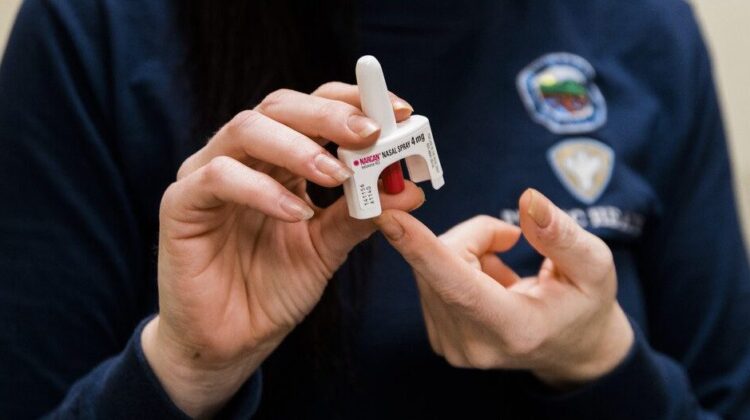
One of the most significant updates discussed was the addition of public access to emergency opioid overdose medication, commonly known as NARCAN. Under previous regulations, only licensed nurses were allowed to administer NARCAN in schools. The revised policy now allows unlicensed individuals to administer the medication in an emergency.
“This has been a big push for probably two years now,” Rubello said. “We’ve talked about it with our emergency management team, our district safety team, and the Board of Health.”
Rubello explained that NARCAN is safe to use and does not harm someone who is not experiencing an opioid overdose.
“It only helps people who do have opioids in their system,” she said. “There’s no concern about giving it to someone who isn’t having an opioid reaction.”
Under the proposed plan, NARCAN kits will be placed in small, clearly marked cases near AEDs in school gym areas, allowing for access during school hours and after-hours community use. Each school nurse’s office will also have NARCAN available.
“If everything goes through in February,” Rubello said, “we’ll be training all staff at upcoming faculty meetings on recognizing overdose symptoms, how to administer Narcan, and what the protocol is afterward.”
Committee members asked whether students would be informed about the availability of Narcan and whether they would be allowed to use it. Rubello confirmed that student education is an important component of the initiative.
“There’s been a big educational push to get kids involved,” she said. “Unfortunately, they may be around people who could overdose, and we want them to have the knowledge to help save someone’s life.”
Rubello shared that NARCAN education is already being incorporated into CPR classes at the high school.
“We’re showing them what opioid overdoses look like and how to use the device,” she said. “That education piece will continue.”
While staff training has been the primary focus so far, Rubello acknowledged that broader student education, especially at the high school level, may be expanded.
“That’s something we should look into more,” she said.
Another area of discussion involved student self-carrying of medications. Although state regulations now allow expanded self-carry options, Lynnfield Public Schools plans to continue limiting self-carry to emergency “rescue” medications, such as inhalers, epinephrine auto-injectors, diabetes supplies, and certain cystic fibrosis medications.
“We really didn’t want kids carrying medications like Tylenol or Advil on their person during the school day,” Rubello explained. “For safety reasons, we want those locked in the nurse’s office and administered by the nurse.”
She added that, even at the high school level, nurses frequently see students misuse common over-the-counter medications.
“We feel it’s safer to monitor those medications rather than have students carry them,” she said.
Decisions about self-carrying emergency medications will remain individualized.
“Every student is different,” Rubello noted. “It depends on maturity level and what parents are comfortable with.”
Committee members highlighted the district’s emphasis on helping students gradually build independence in managing their health needs.
“There’s that readiness piece,” DePrizio said. “Some students and families really need that.”
Rubello agreed, emphasizing that self-carry comes with education and oversight.
“There’s a teaching piece,” she said. “There is definitely an education piece and that’s built into our protocols.”
With no edits suggested during the meeting, the updated medication policy will be posted publicly and brought forward for a vote at the next School Committee meeting.